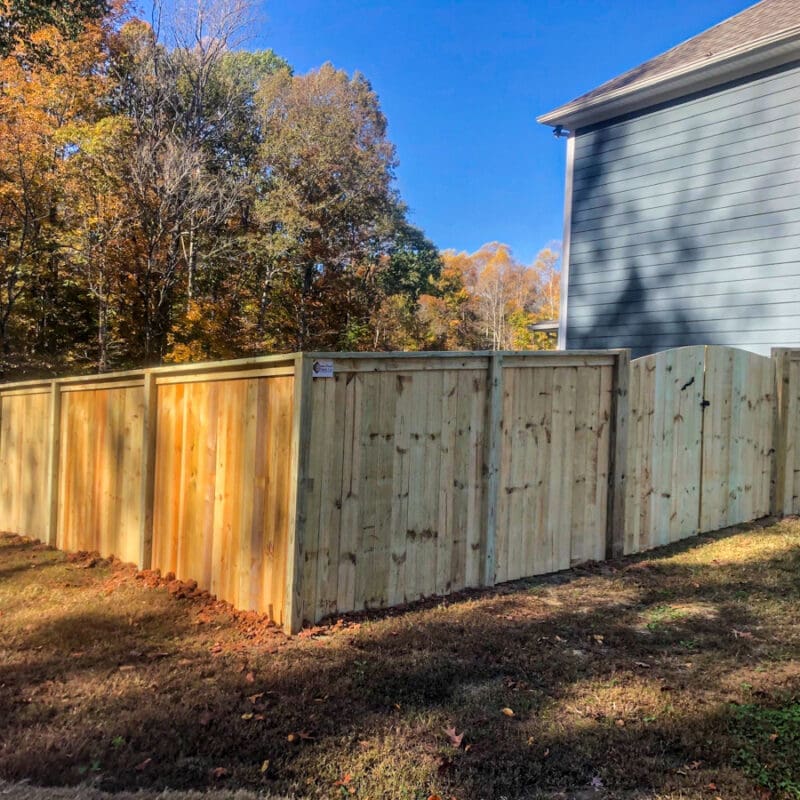
Cost depends on the total linear footage, number of rails, materials, terrain, gates, site access, whether wire is included, and other property conditions. Large-acreage projects can vary considerably based on layout, so a site-specific quote provides the most accurate pricing.

Farm & Split Rail Fences in Middle TN
Custom Farm and Split Rail Fence Installation for Acreage, Homes, and Rural Properties

Define Your Property Without Blocking Views
Home Deck & Fence Company builds custom farm and split rail fences throughout Middle Tennessee. We plan each fence around your property’s terrain, boundaries, access needs, intended use, and preferred appearance.
Whether you want to frame a residential property, establish boundaries across several acres, or combine a rail fence with wire for added containment, we’ll help you choose a design that fits the property and its purpose.
Farm and Split Rail Fence Installation
Large properties face different fencing challenges than small residential lots.
Long fence runs, uneven terrain, wooded areas, drainage, gates, driveways, and changes in elevation can all affect the design and installation. The location and spacing of posts also have a major impact on how a rail fence looks across a large property.
We consider these conditions before construction begins.
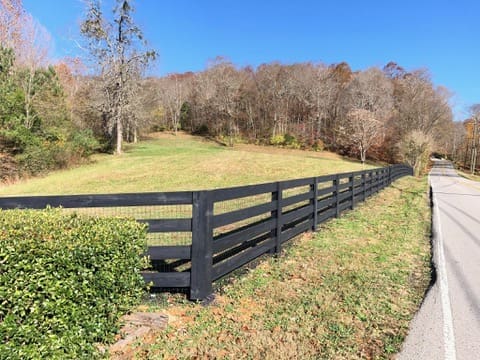
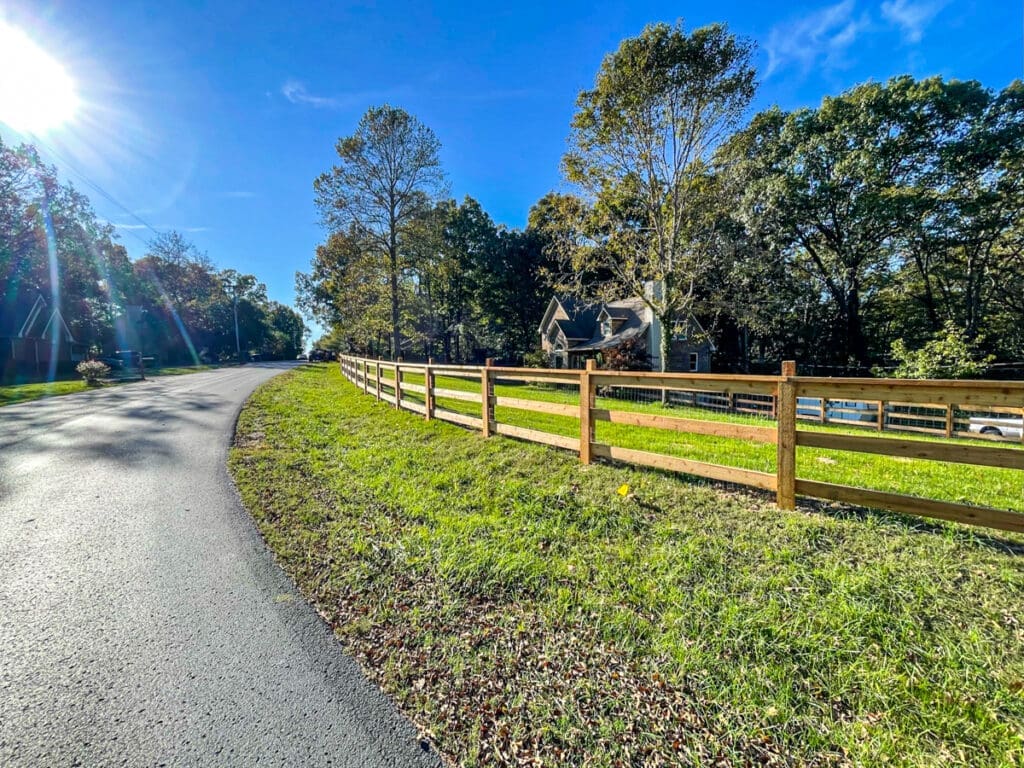
Our goal is to build a fence that follows your property naturally, provides the function you need, and creates clean, attractive boundaries without making an open property feel enclosed.

Why Choose a Farm or Split Rail Fence?
Farm and split rail fencing works well when you need a visible property boundary but don’t need the coverage of a privacy fence.
Depending on the design and application, this style of fencing can help you:
- Define property lines and large yards
- Fence acreage and rural properties
- Preserve views across your property
- Add rustic character to a home or driveway
- Separate different areas of a property
- Create boundaries around fields and open spaces
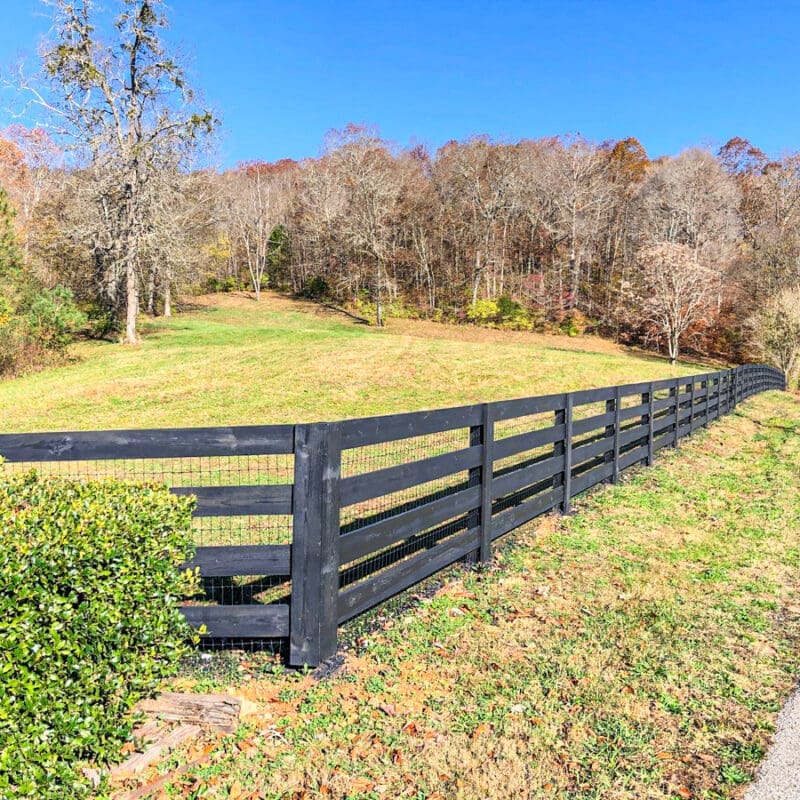
- Combine rails with wire for additional containment
- Incorporate gates for vehicles, equipment, and pedestrians
- Follow rolling or uneven terrain naturally
The open design also requires less visual space than a solid wood fence, making it a natural choice for larger Middle Tennessee properties.
Split Rail Fencing for Homes and Large Yards
You don’t need to own a farm to choose split rail fencing.
Split rail fences work beautifully around larger residential properties where homeowners want to establish boundaries without creating a solid wall around the yard.
They can also add definition along:
- Front yards
- Long driveways
- Property entrances
- Side yards
- Large backyards
- Fields and open spaces
- Wooded areas
- Gardens and landscaping
The natural appearance of wood pairs especially well with properties that have mature trees, open acreage, traditional homes, or rural surroundings.
Wood Farm Fence Styles and Design Options
The number of rails, post spacing, gate design, fence route, wood selection, and optional wire can all change how a farm or split rail fence looks and functions.
Some homeowners primarily want a decorative boundary. Others need a more functional enclosure. Many want both.
We can help you plan a design based on the scale of your property and what you need the fence to accomplish rather than adding features that don’t serve a purpose.
Gates for Farm and Split Rail Fences
Gate placement deserves special attention on larger properties.
You may need a simple pedestrian gate in one location and a wider opening for vehicles, lawn equipment, trailers, or other equipment somewhere else.
We consider how you move around your property before determining gate locations and widths.
A well-planned gate should make everyday access easier without disrupting the appearance or function of the fence.
If your property requires a more specialized entrance, we can also discuss custom gate and access control options.
What's the Difference Between Farm Fence and Split Rail Fence?
The terms farm fence and split rail fence can describe several related fence designs, so homeowners often use them interchangeably.
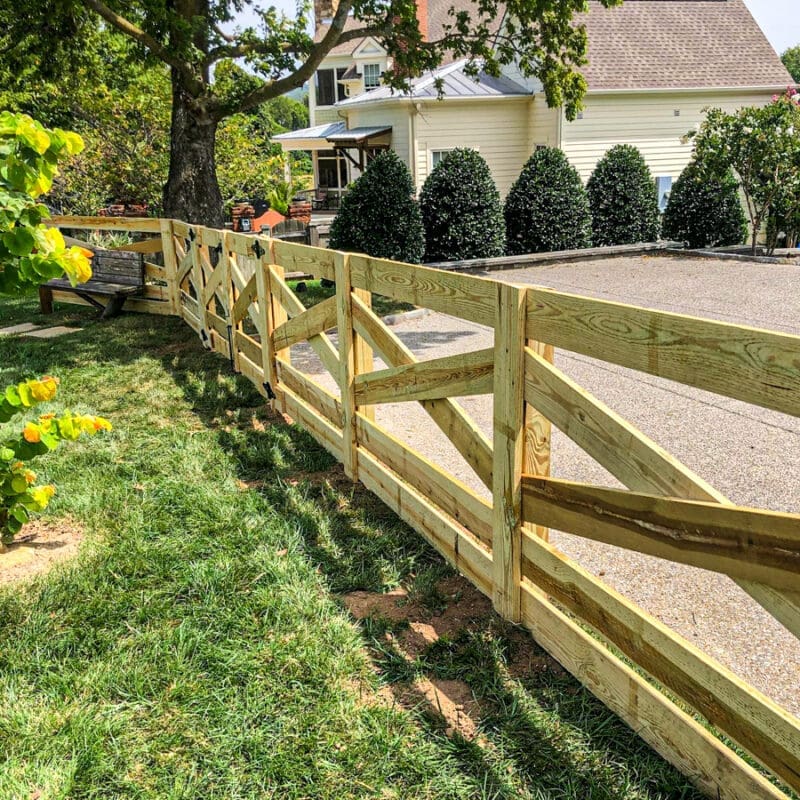
A split rail fence typically uses horizontal wood rails supported by posts to create an open boundary. Its simple appearance makes it popular for rural properties, large residential yards, driveways, and decorative applications.
Farm fencing is a broader category. Depending on what the fence needs to accomplish, a farm-style fence may use wood posts and rails alone or combine wood components with wire fencing for better containment.
The right design depends less on what you call the fence and more on what you need it to do.
Tell us whether your priority is appearance, marking a boundary, containing animals, protecting part of your property, or a combination of these goals. We can help you plan from there.
Farm Fence vs. Privacy Fence: Which Is Right for Your Property?
These fence styles solve very different problems.
A farm or split rail fence makes sense when you want to establish boundaries while maintaining an open view. It can work especially well around acreage, rural properties, large yards, driveways, and open spaces.
A wood privacy fence uses closely spaced boards to reduce visibility through the fence. That makes it better suited to areas where privacy and visual separation are priorities, such as backyards, patios, pools, and neighboring property lines.
Some properties benefit from using both.
For example, you might choose privacy fencing around an outdoor living area and split rail fencing along the more open portions of the property. Using different fence styles based on function can provide privacy where you need it without unnecessarily enclosing the entire property.
Maintaining a Wood Farm or Split Rail Fence
Wood fencing naturally changes as it is exposed to sunlight, rain, humidity, temperature swings, insects, and other outdoor conditions.
The amount of maintenance depends on the wood, finish, drainage, vegetation around the fence, and exposure to the elements.
Periodic inspections help you spot loose rails, damaged sections, leaning posts, gate issues, or areas where vegetation holds moisture against the wood.
Depending on the material and appearance you want, staining or sealing may also be appropriate.
Homeowners who prefer a naturally weathered appearance may choose a different maintenance approach than someone who wants to preserve a particular wood tone.
Property Lines and Local Fence Requirements
Before building any fence, make sure you understand where it can legally be installed.
Cities, counties, subdivisions, and homeowners associations may regulate fence placement, height, setbacks, materials, road visibility, and other details. Easements and utility locations can also affect where fencing can go.
On acreage, don’t assume an existing tree line, mowing line, old fence, or other visual marker represents the legal property boundary.
Confirming boundaries and applicable requirements before construction can help prevent costly disputes or changes later.
Frequently Asked Questions About Fencing
Can you add wire to a split rail fence?
Yes. Wire can be paired with wood rail fencing when the large openings between rails don’t provide enough containment. The appropriate configuration depends on how you plan to use the enclosed area.
Is a split rail fence good for dogs?
A traditional split rail fence alone usually has openings that are too large for reliable dog containment. Adding appropriate wire can make it more practical for some dogs. Size, jumping ability, digging behavior, fence height, and ground clearance should all be considered.
How many rails should a split rail fence have?
The right number depends on the fence design, desired height, appearance, and intended use. Rather than choosing based solely on appearance, consider whether the fence is primarily decorative or needs to support a specific type of enclosure.
Can split rail fencing follow a sloped property?
Yes. Rail fencing can work well across rolling and uneven terrain. Proper layout and post placement help the fence follow grade changes while maintaining an attractive appearance.
Do I need a permit for a farm or split rail fence in Middle Tennessee?
Requirements vary by location and property. Municipalities, counties, subdivisions, and HOAs may have rules governing fence height, location, setbacks, road visibility, and materials. Check the requirements that apply to your property before construction.