
Most projects take one to three weeks depending on size, complexity, weather, and permits.
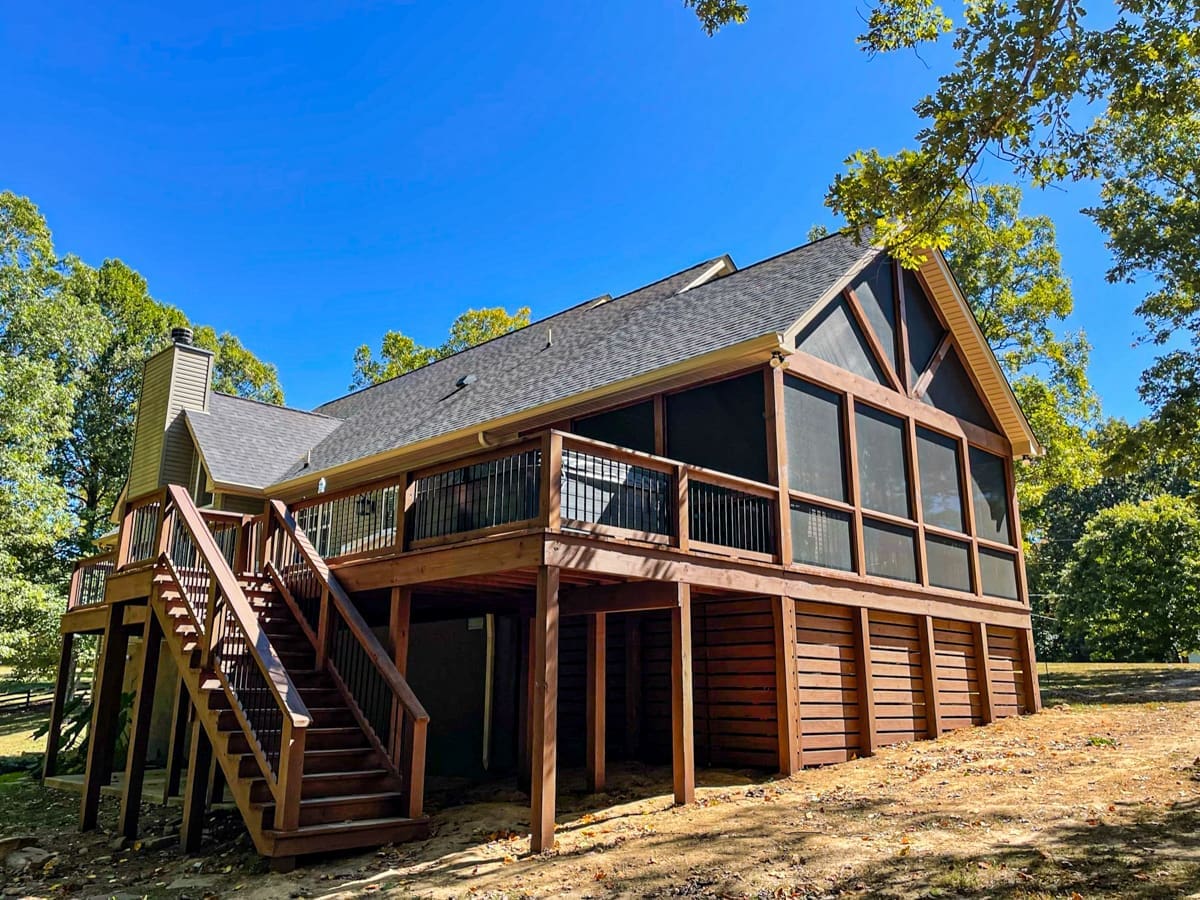
Screened Porch Builders in Middle TN
A Practical Guide to Screened Porch Design, Materials, and Construction in Middle Tennessee

Why Screened Porches Are a Smart Outdoor Upgrade in Middle Tennessee
Screened porches give you the feel of outdoor living without the parts people hate most. Bugs. Harsh sun. Wind-blown debris. Sudden rain. In Middle Tennessee, where warm evenings, humidity, and long mosquito seasons are part of life, a screened porch is one of the most practical outdoor upgrades you can add to your home.
A well-built screened porch extends your living space while still keeping you connected to the outdoors. It works as a place to relax, host friends, eat meals, or enjoy fresh air without constantly retreating indoors.
What Is a Screened Porch and How Homeowners Use It
A screened porch is a covered outdoor structure enclosed with mesh screening instead of solid walls or windows. It can be attached to your home or built as part of a deck or patio system.
Unlike sunrooms, screened porches are not designed to be climate-controlled year-round. They are open, breathable spaces meant to feel like the outdoors while offering protection.
Homeowners commonly use screened porches for:
-
- Casual seating and conversation
- Outdoor dining
- Watching kids or pets in the yard
- Evening relaxation without insects
- A transition space between indoor and outdoor living


When a Screened Porch Is the Right Choice for Your Home
A screened porch is a good fit for homeowners who want to spend more time outside without fully enclosing the space. It works especially well in warmer months and during mild spring and fall weather.
If year-round use or temperature control is important, a sunroom may be a better option.
A screened porch makes sense if you want the following benefits:
- Relief from insects
- Shade and airflow
- Extended use of decks or patios
- Lower cost compared to a sunroom
Screened Porch Design Options and Layout Ideas
Screened porches can be customized to match your home’s style and how you plan to use the space. Size, roof design, and connection points all affect how the porch feels and functions.
Good layouts consider furniture placement, ceiling height, traffic flow, and how the porch connects visually to the rest of the house.
Common design and layout options include the following:
- Attached porches connected directly to the home
- Porches built over existing decks
- Ground-level porches tied into patios or slabs


Roofing and Ceiling Options for Screened Porches
The roof plays a major role in comfort, drainage, and appearance. A well-designed roof helps the porch feel like a natural extension of the home rather than an add-on.
The right combination depends on budget, home architecture, and how the space will be used.
Popular roof and ceiling choices include:
- Gable roofs for increased ceiling height and airflow
- Shed roofs for simpler construction
- Rooflines that match the home for a seamless look
- Open rafters
- Tongue and groove wood ceilings
- Painted beadboard ceilings
Screen Materials and Insect Protection Options
Not all screens perform the same. Screen choice affects visibility, durability, and insect control, especially in humid climates. Quality screen systems resist sagging, tearing, and corrosion over time. Common screen options include:
- Standard fiberglass screens
- Heavy-duty pet-resistant screens
- Fine mesh screens for increased insect control


Flooring Options for Screened Porches
Flooring affects comfort, maintenance, and longevity. The right material depends on moisture exposure, foot traffic, and maintenance preferences. Composite decking is popular for screened porches because it handles moisture well and requires less upkeep.
Common flooring choices include:
- Pressure-treated wood
- Composite decking
- Concrete or pavers for ground-level builds
Best Materials for Screened Porches in Middle Tennessee
Middle Tennessee weather brings humidity, heat, and seasonal storms. Materials must be selected with those conditions in mind. Proper flashing, drainage, and roof tie-ins are critical to prevent rot and structural damage.
Typical construction materials include:
- Pressure-treated framing lumber
- Cedar for natural resistance to insects and moisture
- Exterior-rated fasteners and hardware


Screened Porch Maintenance and Long-Term Care
Screened porches require less maintenance than fully enclosed rooms, but regular upkeep is still important for longevity. Quality materials and proper installation reduce long-term maintenance needs. Homeowners should expect to handle:
- Cleaning screens
- Inspecting fasteners after storms
- Resealing or repainting wood surfaces
- Clearing debris from roofs and gutters
What Affects the Cost of a Screened Porch
Screened porch costs vary based on design and material choices. There is no one-size price. Screened porches typically cost more than open decks and less than sunrooms. Major cost factors:
- Porch size
- Roof complexity
- Flooring material
- Screen type
- Ceiling finish
- Electrical features like lighting or fans
- Attached versus freestanding construction

Frequently Asked Questions About Screened Porches
Can a screened porch be built on an existing deck?
Sometimes. The deck must be structurally sound and able to support a roof. Many decks need reinforcement.
Do screened porches keep out all insects?
They significantly reduce insects but are not airtight. Proper installation minimizes gaps.
Can a screened porch be used in winter?
It can be used during mild weather but is not insulated or heated.
Do screened porches add home value?
Yes. They add functional living space and appeal to buyers in Tennessee.
What is the difference between a screened porch and a sunroom?
Screened porches use mesh screens and are not climate-controlled. Sunrooms use windows and can be heated and cooled.


